

Gynecologic Cancer Awareness Explores How HBOT Benefits Post-Radiation Effects

Advanced Hyperbaric Recovery Inc
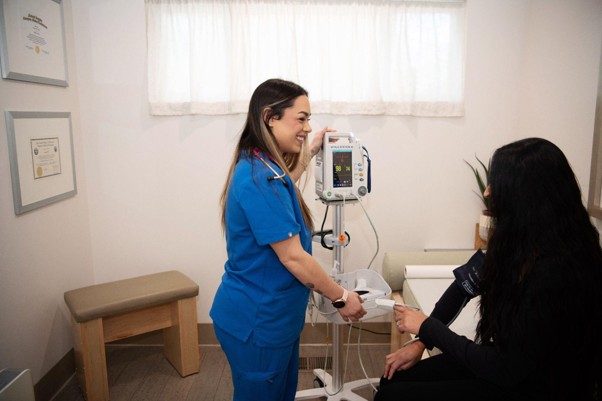
Certified Hyperbaric Technicians
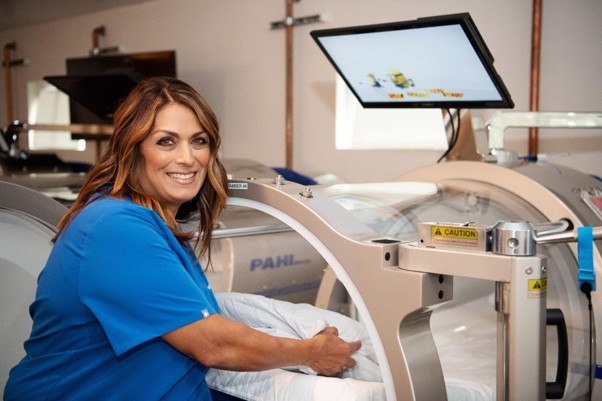
hyperbaric oxygen therapy center located in San Rafael, California

Certified Hyperbaric Technicians.
Advanced Hyperbaric Recovery highlights HBOT for supporting healing from selected post-radiation tissue injuries during Gynecologic Cancer Awareness Month.
SAN RAFAEL, CA, UNITED STATES, September 10, 2026 /EINPresswire.com/ -- Gynecologic cancer treatment can involve radiation therapy, surgery, chemotherapy, or a combination of these treatments. Radiation can be an important part of cancer care; the good news is that it works. Unfortunately, it may also affect healthy tissue within the treatment area. Some radiation-related tissue problems appear months or even years after treatment has ended. During Gynecologic Cancer Awareness Month, Advanced Hyperbaric Recovery Inc. is highlighting delayed radiation tissue injuries and the role of hyperbaric oxygen therapy, known as HBOT, in their care. The focus is on complications that can develop after radiation treatment, not on treating gynecologic cancer itself.Post-Radiation Problems May Appear Long After Treatment
Radiation can affect both cancer cells and nearby healthy tissue. Early effects may occur during or shortly after treatment. Delayed radiation injuries can develop much later (3-7 years later) and may involve the bladder, bowel, vagina, vulva, pelvic tissues, and other structures exposed to radiation.
These injuries can affect blood vessels and reduce the ability of tissue to receive enough oxygen. The tissue may also develop fibrosis, reduced flexibility, and a lower capacity for normal repair. As a result, wounds may heal slowly, and damaged tissue may remain vulnerable to further breakdown.
Symptoms depend on the location and severity of the injury. They may include pain, bleeding, ulceration, tissue breakdown, urinary problems, bowel symptoms, vaginal changes, or difficulty healing after a procedure.
A history of radiation does not automatically mean that a new symptom is caused by radiation injury. A medical evaluation is needed to identify the underlying cause and determine the appropriate treatment.
How Radiation Can Affect Tissue Repair
Healthy tissue depends on an adequate blood supply to deliver oxygen and nutrients. Radiation can damage small blood vessels and cause changes in the surrounding tissue. Over time, these changes can create an environment in which normal healing becomes more difficult.
The process can involve several stages. Blood vessel damage may reduce oxygen delivery. Fibrotic changes may make tissue less flexible. The ability to repair small injuries can also decline.
This is one reason delayed radiation injury can be difficult to manage. The original radiation treatment may have taken place years earlier, yet the tissue effects can remain clinically important.
Treatment depends on the affected area and the specific problem. Depending on the case, care may involve gynecology, oncology, urology, colorectal specialists, wound care, or other medical services.
HBOT Helps Support Tissue Healing
HBOT involves breathing 100% medical-grade oxygen inside a slightly pressurized chamber. Increased pressure allows more oxygen to dissolve in the blood plasma and reach tissues that may have impaired circulation.
Increases tissue oxygenation in hypoxic, damaged urologic tissue. Reduces edema and inflammatory signaling in affected tissues. Stimulates angiogenesis and development of new microvasculature. Enhances leukocyte function and oxygen-dependent host defense. Promotes fibroblast activity and collagen synthesis for tissue repair. Supports mucosal and soft-tissue regeneration. Improves long-term tissue perfusion through vascular remodeling. Mobilizes progenitor cells involved in vascular regeneration.
Case Studies: A total of 2,538 patient entries-Clinical outcomes following HBOT were all positive, with symptoms that improved or resolved varying from 76.7% to 92.6% depending on injury type.
~ (Jeffrey A Niezgoda, MD, FACHM, Thomas E. Serena, MD, FACS. ADV SKIN WOUND CARE 2016; 29:12-9)
Symptoms were alleviated in 76% of patients with radiation cystitis, 89% for
patients with radiation proctitis, and 88% of patients with combined cystitis and proctitis. Improvements were sustained 6-12 months after HBOT.
~ (Niccolas Oscarsson, MD, Per Arnell, MD< Int J Radiation Oncol Biol Phys, Volpp 1-6, 2013 0360)
62 patients- 86% had complete resolution or marked improvement of hematuria
following HBOT.
~ (Journal of Urology Vol 169, 2200-2202 June 2003)
HBOT helps support tissue healing by increasing oxygen availability during treatment and supporting biological processes involved in tissue repair. Repeated treatments may also promote changes in the local tissue environment that are relevant to healing.
For delayed radiation injuries, HBOT is considered for selected patients based on the diagnosis and clinical assessment. It does not treat the original gynecologic cancer, remove tumors, or replace cancer surveillance and other medically indicated care.
The treatment plan depends on the type of injury, its severity, previous treatment, current health status, and the patient's response to care. Medical assessment is therefore an important part of deciding whether HBOT is appropriate.
Diagnosis Comes Before Treatment Selection
Post-radiation symptoms can have several possible causes. A patient with pelvic pain, bleeding, tissue breakdown, or urinary symptoms may have radiation injury, but other medical conditions can cause similar findings.
Clinical evaluation may include a review of the patient's cancer and radiation history. Depending on the symptoms, physicians may also use imaging, laboratory tests, endoscopy, cystoscopy, wound assessment, or other diagnostic procedures.
This evaluation is important for ruling out conditions that require different care. It also helps establish whether a delayed radiation injury is present and whether HBOT should be considered as part of the treatment plan.
The goal is to match treatment with the actual cause and severity of the tissue problem rather than assume that every post-radiation symptom has the same origin.
Medical Grade HBOT Uses Structured Clinical Procedures
Advanced Hyperbaric Recovery Inc. provides outpatient medical-grade HBOT in San Rafael, California. Treatment is delivered using hard medical-grade chambers and 100% medical-grade oxygen under controlled pressures.
The clinical setting includes physician oversight and trained Certified Hyperbaric Technicians. Treatment sessions include ongoing communication between the patient and clinical staff. Relevant treatment information and clinical observations are documented as part of the patient's care.
The facility also follows equipment inspection and maintenance procedures. Chamber systems undergo routine inspections, scheduled manufacturer servicing, technical compliance evaluations, and required pressure testing and certification.
These measures are relevant to HBOT because treatment involves controlled changes in pressure and oxygen exposure. Appropriate patient screening, treatment planning, equipment maintenance, and clinical monitoring are all part of responsible hyperbaric care.
How HBOT Supports Healing After Radiation in Gynecological Patients
Radiation can affect healthy tissue within the treated pelvic area by damaging small blood vessels and reducing oxygen delivery. Over time, these changes may lead to fibrosis, poor tissue repair, pain, bleeding, or tissue breakdown. HBOT helps support tissue healing by having patients breathe 100% medical-grade oxygen under controlled pressure. The higher pressure increases the amount of oxygen carried in the blood, allowing more oxygen to reach tissues affected by radiation. Repeated treatments may support angiogenesis, which is the growth of new small blood vessels. This can improve the local healing environment and support collagen formation and tissue repair. The response varies by patient and depends on the extent of tissue changes, overall health, and the underlying condition.
Treatment Plans Depend on the Individual Injury
HBOT is not appropriate for every person who has received radiation therapy. It is considered for specific medical conditions and requires an assessment of the patient's clinical history.
Treatment parameters may vary according to the diagnosis. Pressure, oxygen exposure, treatment duration, and the number of sessions are determined by the medical team based on the condition being treated and established clinical protocols.
The response to treatment can also vary. Some patients may require a course of HBOT as part of wound or tissue care, while others may need a different combination of medical or surgical treatment.
This individualized approach is important because radiation injuries can affect different organs and tissues in different ways.
Awareness Includes Care After Cancer Treatment
Gynecologic Cancer Awareness Month often centers on prevention, screening, diagnosis, and cancer treatment. It also provides an opportunity to discuss health problems that may remain after treatment has ended.
Delayed radiation tissue injury can be one of those problems. Symptoms may occur long after the original cancer treatment, making recognition and diagnosis an important part of follow-up care.
Research into HBOT has shown potential benefits for selected radiation-related tissue injuries, particularly in areas involving poor healing and tissue breakdown. At the same time, available research has limitations, and continued study is needed.
For patients with suspected radiation injury, the underlying condition should be evaluated before treatment options are selected. HBOT may form one part of a broader medical plan based on the patient's diagnosis and clinical needs.
Case Study 1: HBOT Outcomes in Radiation-Induced Vaginal Necrosis
A retrospective case series reviewed seven women with radiation-induced vaginal soft tissue necrosis after pelvic cancer treatment. Six received once-daily HBO2 therapy. Four patients showed improvement in radionecrosis. Among five patients with pelvic pain, four reported resolution, including two who no longer needed opioid analgesia. Two patients with vaginal bleeding also improved, with one experiencing complete resolution. Overall, five of six treated patients, or 83%, improved in at least one measured outcome. The small sample limits broader conclusions.
For more detailed clinical information, additional case studies offer insight into HBOT protocols, patient outcomes, and follow-up findings.
Case Study 2: https://pmc.ncbi.nlm.nih.gov/articles/PMC3185899/
Case Study 3: https://www.ajog.org/article/S0002-9378(11)91421-5/abstract
Recognizing Delayed Effects Can Guide Appropriate Care
Radiation therapy can have lasting effects on healthy tissue, and some complications may appear long after gynecologic cancer treatment has ended. Understanding these delayed effects can help support timely evaluation and appropriate care. HBOT helps support tissue healing in selected radiation-related tissue injuries by increasing oxygen availability and supporting processes involved in repair. It is not a treatment for gynecologic cancer itself. Research continues to examine its role in different post-radiation complications, while clinical decisions remain based on the patient's diagnosis, treatment history, overall health, and response to care.
About Advanced Hyperbaric Recovery Inc.
Advanced Hyperbaric Recovery Inc. is an outpatient medical-grade hyperbaric oxygen therapy center located in San Rafael, California. The center provides HBOT under medical supervision using established treatment protocols, trained hyperbaric personnel, patient monitoring, and structured equipment maintenance and quality assurance procedures.
Media Contact:
Advanced Hyperbaric Recovery
Address: Advanced Hyperbaric Recovery, 1118 Irwin St, San Rafael, CA 94901
Fax: (415) 785-8697
Phone: (415) 785-8652
Email: Info@ImproveHealing.com
Advanced Hyperbaric Recovery
Advanced Hyperbaric Recovery
+1 (415) 785-8652
email us here
Visit us on social media:
Instagram
Facebook
Legal Disclaimer:
EIN Presswire provides this news content "as is" without warranty of any kind. We do not accept any responsibility or liability for the accuracy, content, images, videos, licenses, completeness, legality, or reliability of the information contained in this article. If you have any complaints or copyright issues related to this article, kindly contact the author above.
