

Former Prosecutor and Law Professor's 'Pink Crime' Examines How Motherhood and Queer Identity Become Evidence
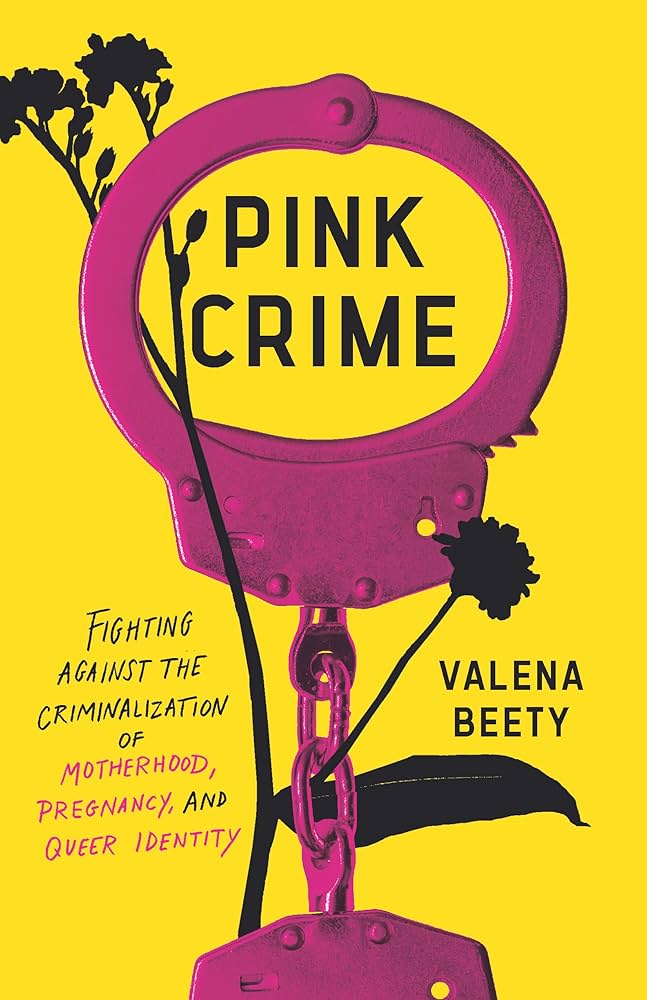
Pink Crime: Fighting Against the Criminalization of Motherhood, Pregnancy, and Queer Identity,” published by The New Press on August 4, 2026
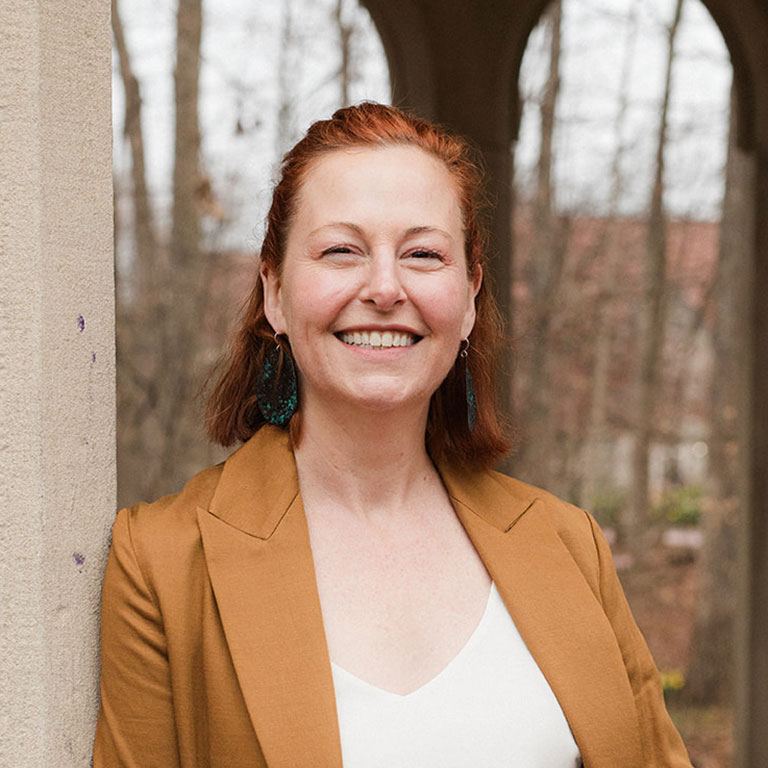
Valena Beety, author of 'Pink Crime'
Former federal prosecutor Valena Beety examines how miscarriages and sudden deaths are rebuilt into murder cases, and why women are often charged.
Beety is a former federal prosecutor, an innocence litigator, and the McKinney Professor of Law at Indiana University-Bloomington Maurer School of Law. She is a founding board member of the Indiana Innocence Project and previously served as founding director of the West Virginia Innocence Project. Her scholarship on faulty forensic evidence has been cited by judges, including U.S. Supreme Court Justice Sonia Sotomayor. Her earlier book, "Manifesting Justice: Wrongly Convicted Women Reclaim Their Rights," received a Gold Medal in Women's Issues from the Independent Publisher Book Awards.
By Beety's account, roughly 75 percent of exonerated women in the United States were convicted in cases where no crime occurred. She attributes that pattern to a combination of discredited forensic science, prosecutorial overreach, and jury assumptions about how mothers and queer people behave.
“In my fifteen years as an innocence litigator, . . . I learned that criminal laws are weaponized against vulnerable people, and increasingly more of us are targeted. This realization is part of what led me to write this book.”
The argument is built through a series of cases examined in detail. These include the prosecution of Brittney Poolaw, a young Indigenous woman sentenced after a miscarriage that medical evidence attributed to a genetic abnormality while only trace amounts of methamphetamine were detected in her blood; the wrongful conviction and eventual exoneration of the San Antonio Four, which the book argues was fueled by homophobia; and the case of Roseberline Turenne, who received a 126-year sentence after photographs documenting children's diaper rashes at the daycare where she worked were found on her phone. The book argues that prosecutors invited jurors to infer sexual interest in children based solely on her queerness.
Beety connects that history to current law. The book examines fetal personhood statutes, the overturning of Roe v. Wade, and recent anti-LGBTQ+ legislation, and argues that together they widen the range of ordinary conduct that can be charged. It also examines how criminal law is used to police gender affirming care, queer families, and reproductive decisions.
"Pink Crime" includes an introduction by Christina Swarns, executive director of the Innocence Project, and is available now from The New Press. Beety is available for interviews on wrongful convictions, forensic evidence, and the prosecution of pregnancy outcomes.
# # #
ABOUT THE AUTHOR:
Valena Elizabeth Beety is a law professor, an innocence litigator, and a former federal prosecutor. She is a founding board member of the Indiana Innocence Project and the McKinney Professor of Law at Indiana University-Bloomington Maurer School of Law. Beety previously served as founding director of the West Virginia Innocence Project at West Virginia University College of Law and deputy director of the Academy for Justice at Arizona State University's Sandra Day O'Connor College of Law. She has successfully exonerated wrongfully convicted clients, obtained presidential grants of clemency for drug offenses, served as an elected board member of the national Innocence Network, and served as an appointed commissioner on the West Virginia Governor's Indigent Defense Commission. Her experiences as a federal prosecutor and as an innocence litigator shape her research and writing on wrongful convictions, forensic evidence, prosecution, and incarceration. She is the co-author of The Wrongful Convictions Reader, a coursebook used in classrooms nationwide, and author of the award-winning Manifesting Justice: Wrongly Convicted Women Reclaim Their Rights. She has earned awards for her teaching, service, and scholarship, including the Indiana University Trustees' Teaching Award and the Leonard D. Fromm Public Interest Award for Faculty. She lives in Indiana with her wife, daughter, and tripod dog.
ABOUT THE BOOK:
A woman miscarries—and is charged with murder. A new mother tests positive for a drug her hospital administered—and loses custody of her newborn. Four women are convicted of horrific crimes against children they never touched, based on junk science and homophobia—and spend nearly twenty years in prison before being exonerated. A queer teenager takes a photo of a child’s diaper rash at work—and is sentenced to 126 years. These cases are not aberrations. They are symptoms of a system that punishes women and queer people not for what they have done, but for who they are.
In the United States, nearly three-quarters of all wrongly convicted women were convicted of crimes that never occurred at all. Valena Beety, co-founder of the Indiana Innocence Project and award-winning legal scholar cited by Justice Sonia Sotomayor, reveals how ordinary tragedies—a child’s sudden death, a husband who dies in his sleep—are transformed by prosecutors into murders that never happened. These “no crime” convictions disproportionately target women and queer people, whose identities are recast as evidence of guilt through bias, junk science, and entrenched stereotypes.
Drawing on devastating real-life cases, Beety exposes how prosecutorial overreach, flawed forensic science, and cultural panic converge—and how fetal personhood laws, the fall of Roe v. Wade, and anti-LGBTQ+ legislation have dramatically expanded the reach of criminal law. What emerges is a chilling portrait of a legal system that increasingly criminalizes pregnancy outcomes, motherhood, and queer identity itself.
MEDIA CONTACT:
To request a copy of " Pink Crime: Fighting Against the Criminalization of Motherhood, Pregnancy, and Queer Identity," contact publicist Nanda Dyssou of Coriolis Company.
Nanda Dyssou
Coriolis
+1 424-226-6148
nanda@corioliscompany.com
Visit us on social media:
LinkedIn
Instagram
Facebook
X
Legal Disclaimer:
EIN Presswire provides this news content "as is" without warranty of any kind. We do not accept any responsibility or liability for the accuracy, content, images, videos, licenses, completeness, legality, or reliability of the information contained in this article. If you have any complaints or copyright issues related to this article, kindly contact the author above.
